

DEP vs Traditional Mesotherapy: A Full Technical Comparison
A Data-Driven Analysis for Aesthetic Practitioners
In the evolving landscape of aesthetic medicine, the way we deliver active ingredients into the skin is undergoing a fundamental shift. Traditional mesotherapy—using fine needles to inject cocktails of vitamins, hyaluronic acid, and other actives—has long been the gold standard. But a new generation of technology is challenging that status quo: DEP (Dermoelectroporation®) .
This guide provides a technical comparison between the DEP system and traditional injection-based mesotherapy. We examine the mechanisms, clinical evidence, patient experience, and practical considerations for clinics considering this technology.
Part 1: What Is DEP Technology?
DEP stands for Dermoelectroporation® , a patented non-invasive transdermal drug delivery system developed by Mattioli Engineering, an Italian medical device company founded in 1991 .
The Mechanism: How DEP Works
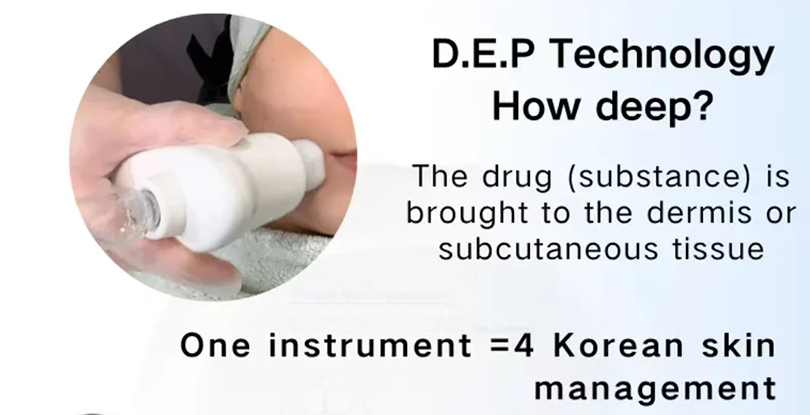
DEP technology uses a proprietary pulsed electrical current to temporarily increase cell membrane permeability. This process, known as electroporation, creates microscopic "water-based channels" in the skin's cell membranes without causing damage .
The key technical features include:
| Feature | Description |
|---|---|
| Current Type | Controlled pulsed current with mechanical vibration synchronization |
| Frequency | 2200 Hz pulse frequency |
| Penetration Depth | Reaches the dermis and hypodermis |
| Molecular Size | Can deliver small, medium, and large molecules (including hyaluronic acid) |
| Skin Effect | Opens aquaporins temporarily; no tissue damage |
The DEP 2 Generation Beauty Device represents the latest evolution of this technology, featuring upgraded energy output, enhanced safety mechanisms, and a refined user interface .
Regulatory Validation
The DEP system has received significant regulatory recognition:
-
FDA Cleared as "an alternative to injections" for the local administration of ionic drug solutions for medical purposes
-
CE Marked for the European market
This regulatory validation is critical for aesthetic practitioners who require confidence in their equipment's safety and efficacy.
Part 2: Traditional Mesotherapy Injection — The Reference Standard
Traditional mesotherapy involves using fine needles (typically 30G or smaller) to inject a customized cocktail of active ingredients directly into the mesoderm—the layer of skin between the epidermis and the subcutaneous fat .
The Mechanism
| Feature | Description |
|---|---|
| Delivery Method | Manual injection or multi-needle gun (e.g., 5-needle or 9-needle heads) |
| Penetration Depth | Directly into the dermis (precise depth control) |
| Molecular Size | Can deliver any molecule, including large fillers |
| Absorption Rate | 100% of injected volume reaches the target layer |
Proven Efficacy
The primary advantage of injection-based mesotherapy is certainty. When a product is injected, it is definitively placed in the target tissue. There is no question about absorption rates or penetration depth. This makes traditional mesotherapy highly effective for targeted, precise treatments .
Part 3: Head-to-Head Comparison — DEP vs Traditional Injection
Parameter Comparison Table
Efficacy: Does DEP Work as Well as Injections?
According to clinical comparisons cited in aesthetic literature, DEP demonstrates comparable efficacy to traditional mesotherapy for many indications—without the pain, downtime, or infection risk . Key findings include:
-
DEP's proprietary electroporation can deliver active ingredients to the dermis and hypodermis, achieving results similar to injection .
-
Larger molecules (including hyaluronic acid and peptides) are now deliverable via DEP, overcoming earlier limitations .
-
A comparison chart shows DEP achieving "moderate to high" absorption for small to medium molecules, with an excellent safety profile .
One reviewer described the DEP experience as "the product seems to be of reasonably good quality" and noted that the DEP 2 Generation Beauty Device is designed to achieve a "faster, deeper-penetrating alternative to traditional iontophoresis" .
Part 4: The DEP 2 Generation Beauty Device — What's New?
The DEP 2 Generation Beauty Device (also referred to as the DEP ES-II model) introduces significant upgrades over the original system .
Key Upgrades
The Safety Button — A Critical Enhancement
The DEP 2 Generation Beauty Device features a new safety button on the treatment handpiece. If the device detects that the handpiece is not fully in contact with the skin, it automatically cuts the current. The therapist must press the safety button again to restart the current .
This innovation:
-
Prevents accidental stimulation
-
Ensures that the current is only active when the device is properly positioned
-
Gives therapists full control of the treatment rhythm
Part 5: The Patient Experience — A Key Differentiator
DEP: Comfort Without Compromise
DEP treatments are described as comfortable and relaxing. One user review compared the sensation to "skin drinking water"—a pleasant, non-painful experience . The device's mechanical vibration, synchronized with the electrical pulses, reduces the perception of the electrical current .
Key patient benefits:
-
Zero pain — no needles, no anesthetic required
-
Zero downtime — patients can resume normal activities immediately
-
No risk of infection, bleeding, or bruising
Traditional Injection: Proven but Punishing
Traditional mesotherapy injections are described as "very painful" and require topical anesthetic application and up to 30 minutes of waiting time before treatment . Post-treatment side effects include:
-
Redness and swelling (typically lasting 2-3 days)
-
Bruising (common, lasting up to 7 days)
-
Pinpoint bleeding at injection sites
-
Scabbing or crusting in some cases
For patients who require regular treatment (e.g., monthly or quarterly), the cumulative discomfort and downtime of injections can be a significant deterrent.
Part 6: Practical Considerations for Clinics
Investment and ROI
| Consideration | DEP | Traditional Injection Equipment |
|---|---|---|
| Capital Cost | Moderate (equipment purchase) | Low (needles, guns, anesthetic) |
| Consumable Cost | Low (syringes, conductive gels) | High (needles, anesthetic, aftercare) |
| Training Required | Moderate (device familiarization) | High (injection technique, anatomy, safety) |
| Regulatory Burden | Lower (non-invasive) | Higher (infection control protocols) |
Which Technology Should You Offer?
DEP is the better choice if:
-
Your clientele includes needle-phobic patients
-
You want to offer a high-comfort, zero-downtime alternative
-
You are looking for a versatile facial machine to add to your treatment menu for rejuvenation and mesotherapy applications
-
You want to expand your service menu without adding significant procedural risk
Traditional injection mesotherapy is preferred if:
-
Your practice routinely performs invasive procedures
-
You require the ability to deliver any molecule (including large-volume fillers)
-
Your patients are comfortable with injections and seek targeted, high-precision treatment
Part 7: Safety and Regulatory Considerations
Authenticity Matters
The market for DEP devices has seen an influx of counterfeit products. Practitioners should be aware of the risks associated with non-genuine devices :
Recommendation: Always purchase from authorized distributors and verify the device's authenticity before clinical use.
Summary: The Verdict
Both DEP technology and traditional mesotherapy injections are clinically effective methods for delivering active ingredients into the skin. The choice between them depends on the priorities of your clinic and your patients.
When to Choose the DEP 2 Generation Beauty Device
-
✅ For a pain-free, zero-downtime treatment experience
-
✅ For patients with needle anxiety
-
✅ For a versatile facial machine that can perform mesotherapy, skin rejuvenation, and transdermal delivery
-
✅ To offer a modern, technology-driven service that differentiates your clinic
-
✅ For a safer, non-invasive alternative to injections for most indications
When to Choose Traditional Injection
-
✅ For precise, targeted delivery to specific skin layers
-
✅ For treatments requiring large molecule delivery (e.g., some fillers)
-
✅ When you have a patient base already comfortable with injections
The DEP 2 Generation Beauty Device represents a significant advancement in aesthetic technology, offering a compelling alternative to traditional injection-based mesotherapy. Its growing clinical validation, combined with a superior patient experience, makes it a strategic addition for many aesthetic practices.