

How to Avoid Skin Burns When Operating a High-Power Laser Hair Removal Machine
A Safety Guide for Salon Owners and Aesthetic Practitioners
Laser hair removal is one of the most popular aesthetic treatments worldwide, but it carries a real risk: skin burns. When operating high-power systems, the margin for error is small. A wrong parameter, a missed cooling step, or an overlooked contraindication can turn a routine treatment into a painful complication.
The good news is that burns are almost entirely preventable. This guide covers the clinical best practices for safe operation—from patient selection to parameter settings to cooling systems—so you can deliver effective results while keeping your clients safe.
Whether you’re using an aurora laser hair removal system or other professional laser beauty devices, the safety principles remain the same: proper screening, correct settings, and consistent cooling.
Why Do Skin Burns Happen?
Burns during laser hair removal occur when the epidermis (outer skin layer) absorbs too much thermal energy. This usually happens for one of the following reasons:
The fundamental principle to remember is selective photothermolysis: the laser targets melanin in the hair follicle, but melanin in the epidermis is a competing chromophore . The darker the skin, the more energy is absorbed by the skin itself—and the greater the burn risk.
Step 1: Proper Patient Screening
Before any treatment, assess the patient thoroughly.
Fitzpatrick Skin Typing
This is the single most important step. Fitzpatrick skin types I–VI determine which wavelengths and energy levels are safe .
| Skin Type | Characteristics | Recommended Wavelengths |
|---|---|---|
| I–II | Fair skin, burns easily | 755nm, 808nm |
| III–IV | Olive/medium skin | 808nm, 940nm |
| V–VI | Dark skin | 1064nm (Nd:YAG) only |
Important: For Fitzpatrick types IV–VI, using a 755nm Alexandrite or a short-pulse IPL is a direct route to burns. Multiple sources confirm that dark skin requires longer wavelengths (1064nm) with lower melanin absorption to safely bypass the epidermis . A study on Sudanese women (Fitzpatrick IV–VI) confirmed that 1064nm Nd:YAG with low fluence (25–40 J/cm²) is both safe and effective .
Check for Contraindications
Do not treat patients who have:
-
Recent sun exposure or tan (natural or spray). Wait at least 2 weeks .
-
Photosensitizing medications (e.g., Accutane, certain antibiotics) .
-
Gray, white, or blonde hair (laser cannot target these effectively) .
Standardized Consultation Protocol
The New Zealand Health and Disability Commissioner report on laser burns emphasized that a formal consultation form documenting skin type, medications, and treatment parameters is essential for safety—and for liability protection .
Step 2: Parameter Selection
The correct parameters depend on skin type, hair color, body area, and the specific professional laser beauty device you’re using. Never use a one-size-fits-all approach.
Fluence (Energy Density)
Key principle: Start with the lowest effective fluence and increase gradually. A 66% hair reduction with 25 J/cm² has been documented in darker skin types . Higher fluence does not always mean better results—it often just means higher burn risk.
Pulse Duration
Pulse duration should be long enough to target the hair follicle (which needs 40–100ms to be destroyed) but short enough to spare the epidermis (which cools in 3–10ms) . The ideal range for hair removal is typically 10–40ms. For darker skin, longer pulse widths (20–40ms) are recommended to allow more heat dissipation .
Spot Size and Frequency
-
Spot size: Larger spot sizes deliver more total energy. Adjust fluence accordingly. For example, a 13.5×38.5mm spot uses lower fluence (5–28 J/cm²) than a 12.5×14.5mm spot (9–84 J/cm²) .
-
Frequency (Hz): Slower repetition rates (1–3Hz) are safer for high-risk areas and dark skin because they allow more cooling time between pulses .
Test Patch
Always perform a test patch on dark skin types (Fitzpatrick IV–VI). Some practitioners wait 24–48 hours, but the New Zealand expert report noted that pigmentation changes in Fitzpatrick IV–V may take up to 6 weeks to fully manifest .
Step 3: Cooling Systems — Your First Line of Defense
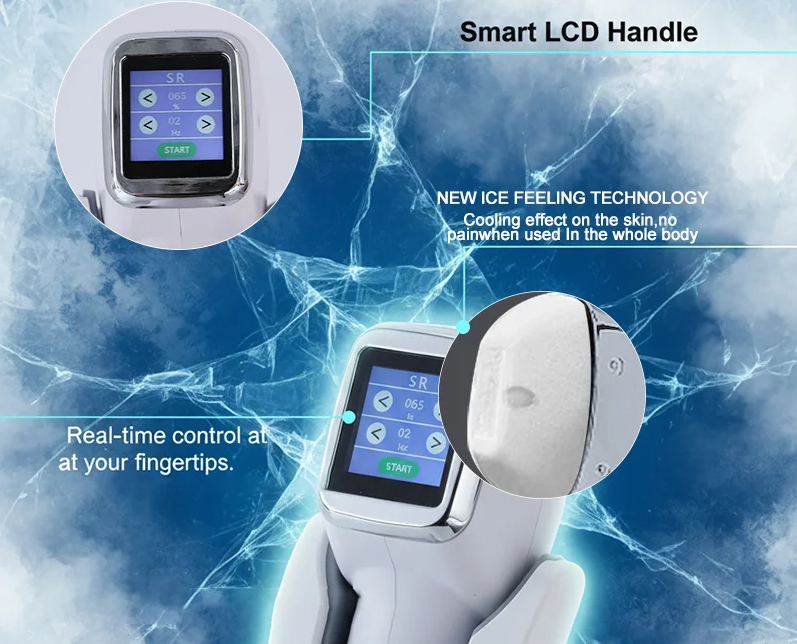
Cooling is not optional. It is the difference between effective treatment and thermal injury. Every professional laser beauty device should include an active cooling system—and you must monitor it.
Critical safety rule: "Forgetting" to use or activate the skin cooling system, or a failure during treatment, can result in burns or blistering . Always monitor the cooling system throughout the session.
The Aurora laser hair removal systems incorporate advanced cooling technologies to minimize discomfort and protect the skin, but even the best cooling cannot compensate for incorrect parameters .
Step 4: Pre-Treatment Preparation
Proper preparation reduces complications:
Documentation: Record all pre-treatment checks, skin type assessments, and parameter selections. This protects both the patient and the practitioner.
Step 5: During Treatment — Operational Best Practices
Monitor Clinical Endpoints
Safe and effective treatment is indicated by:
-
Perifollicular edema (redness and swelling around the follicle) — this shows the follicle was heated.
-
No blistering or whitening of the skin — this shows the epidermis is protected .
If you see blistering or immediate whitening, you are using too much energy. Stop and adjust parameters.
Avoid Overlapping
Do not pass over the same area repeatedly. If you need to treat again, wait until the skin has cooled (slower frequency or longer intervals).
Document Everything
Record:
-
Device settings (fluence, pulse width, frequency, spot size)
-
Cooling system status
-
Patient reactions and clinical endpoints
This documentation is essential for consistent results and medico-legal protection .
Step 6: Post-Treatment Care
If a burn occurs:
-
Stop treatment immediately.
-
Cool the area with cold compresses.
-
Advise the patient to see a dermatologist if blistering or persistent redness occurs .
Frequently Asked Questions (FAQ)
Q1: Can high-power laser hair removal machines cause burns on dark skin?
Yes—if the wrong wavelength or parameters are used. Dark skin requires 1064nm Nd:YAG with lower fluence, longer pulse width, and active cooling. Properly used, high-power systems are safe for all skin types .
Q2: What’s the most common cause of laser burns?
The most common cause is recent sun exposure, which increases epidermal melanin and makes the skin absorb too much energy . The second most common is cooling system failure .
Q3: Is 808nm diode laser safe for all skin types?
The 808nm diode is safer for olive/darker skin than 755nm because it has lower melanin absorption. However, for Fitzpatrick V–VI, the safest wavelength is still 1064nm Nd:YAG .
Q4: How do I know if I’m using the right energy level?
Look for perifollicular edema (redness around the follicle) without blistering or whitening. If you see blistering, the energy is too high. Always start low and increase gradually .
Q5: Do I need a test patch before treating dark skin?
Yes. A test patch is strongly recommended, especially for Fitzpatrick IV–VI. Some experts recommend monitoring the patch for up to 6 weeks before full treatment to detect delayed pigmentation changes .
Q6: Why does the Aurora laser hair removal system require cooling monitoring?
Like all professional laser beauty devices, cooling is your primary epidermal protection. A failure to monitor or activate cooling is a preventable cause of burns .
Final Verdict: Safety Is a System, Not a Setting
Preventing burns when operating high-power laser hair removal machines is not about one safety feature—it’s about a safety system:
-
Screen every patient for skin type, recent sun exposure, and medications.
-
Select the correct wavelength, fluence, pulse duration, and spot size for that patient.
-
Monitor the cooling system continuously.
-
Document every step.
Whether you use an aurora laser hair removal system or any other professional laser beauty devices, these principles are universal. A disciplined approach to pre-treatment screening, parameter selection, and cooling management ensures safe, effective treatments—and satisfied clients who return.