

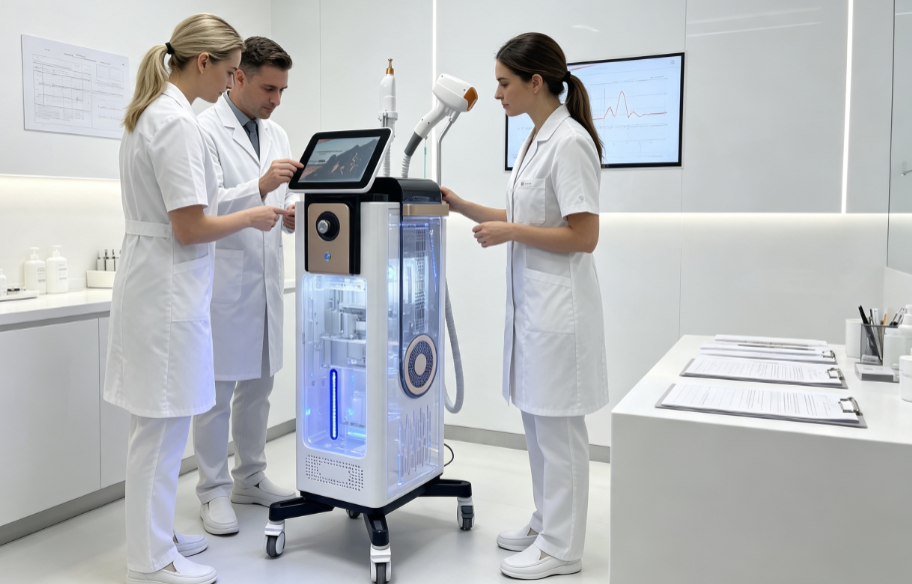
How to Choose a Reliable Diode Laser Hair Removal Machine
Quick Answer
A reliable diode laser hair removal machine is defined by consistent energy output, long-lasting laser components, effective cooling technology, certified manufacturing standards, and dependable supplier support.
For clinics and salons, choosing the right diode laser hair removal equipment requires more than comparing power ratings or prices. Buyers should evaluate laser diode lifespan, thermal management, treatment stability, certification documentation, and after-sales service.
A high-quality system should maintain stable performance through thousands of treatments, minimize downtime, and provide predictable results for different client needs.
Whether selecting a full-size clinical platform or a portable diode laser machine, reliability depends on the quality of internal components, engineering design, and the manufacturer's commitment to long-term support.
Introduction
Purchasing aesthetic equipment is a long-term investment. For clinics, salons, and medical aesthetic centers, a diode laser system is not only a treatment device—it is an important part of daily business operations.
A machine that delivers inconsistent energy, overheats during continuous operation, or requires frequent repairs can directly affect:
-
Treatment results
-
Client satisfaction
-
Appointment schedules
-
Operating costs
-
Business reputation
So, what makes a diode laser hair removal machine reliable?
The answer involves multiple factors working together:
-
Laser diode quality and lifespan
-
Cooling system performance
-
Energy output stability
-
Manufacturing standards
-
Certification compliance
-
Supplier reliability
-
Maintenance support
Many buyers focus mainly on specifications such as wattage, number of shots, or price. However, true reliability comes from how these components perform together during real-world clinical use.
When evaluating diode laser hair removal equipment, professional buyers should look beyond marketing claims and understand the technology behind long-term performance.
1. Laser Diode Quality: The Foundation of Reliability
The laser diode is the core component of any diode laser system.
Its quality directly affects:
-
Treatment effectiveness
-
Energy consistency
-
Equipment lifespan
-
Maintenance costs
A high-quality diode module should provide stable optical output over extended operating periods.
Understanding Laser Diode Lifespan
Most professional diode laser systems are designed with laser modules rated for millions of pulses.
However, the rated shot count alone does not determine actual lifespan.
Several factors influence diode performance:
| Factor | Impact on Reliability |
|---|---|
| Operating temperature | Higher temperatures accelerate diode degradation |
| Energy output | Continuous maximum power increases thermal stress |
| Cooling efficiency | Poor cooling reduces component lifespan |
| Pulse frequency | Higher repetition rates generate more heat |
| Maintenance | Proper care helps maintain stable performance |
A machine rated for a high number of shots may still experience early performance decline if thermal management is insufficient.
Therefore, buyers should evaluate both the diode specification and the engineering design supporting it.
How to Verify Laser Diode Quality Before Purchase
Before purchasing a diode laser system, clinics should ask suppliers several important questions.
1. What Is the Rated Shot Count?
Shot count is an important reference point, but it should not be the only consideration.
Ask:
-
Is the shot count based on laboratory testing?
-
Is it related to actual clinical operating conditions?
-
Does the manufacturer provide supporting documentation?
2. How Stable Is the Energy Output?
Consistent energy delivery is essential for reliable treatment outcomes.
A quality system should maintain:
-
Stable fluence
-
Consistent pulse energy
-
Accurate parameter control
Energy fluctuation can lead to inconsistent treatment results and reduced user confidence.
3. Is the Laser Module Replaceable?
A modular design can reduce long-term service costs.
Benefits include:
-
Easier maintenance
-
Reduced downtime
-
Lower replacement complexity
Professional buyers should understand whether individual components can be serviced instead of replacing an entire system.
2. Cooling System: The Key to Long-Term Performance
Cooling is one of the most important factors affecting diode laser reliability.
Many buyers associate cooling only with patient comfort, but it also plays a critical role in protecting internal components.
During operation, laser diodes generate significant heat. Without effective thermal management:
-
Diode temperature increases
-
Energy output becomes unstable
-
Component aging accelerates
-
System reliability decreases
A reliable diode laser system requires both skin cooling and internal cooling.
Skin Cooling: Protecting Patient Comfort
Most professional systems use sapphire contact cooling technology.
Benefits include:
-
Reducing epidermal temperature
-
Improving treatment comfort
-
Allowing effective energy delivery
-
Protecting the skin surface
For clinics, a good cooling system improves both patient experience and treatment consistency.
Internal Cooling: Protecting Machine Components
Internal cooling protects:
-
Laser diode modules
-
Power components
-
Electronic systems
-
Handpiece components
Common internal cooling technologies:
| Cooling Type | Description | Best For |
|---|---|---|
| TEC Cooling | Thermoelectric cooling with precise temperature control | Compact, accurate thermal management |
| Water Cooling | Strong heat dissipation for high-power operation | Intensive clinical use |
| Air Cooling | Simple, low-maintenance design | Compact/portable systems |
The ideal cooling configuration depends on machine power, treatment volume, and intended application.
Cooling Checklist When Buying a Diode Laser System
| Feature | What Buyers Should Evaluate |
|---|---|
| Skin cooling | Sapphire contact cooling performance |
| Internal cooling | TEC, water, or air cooling design |
| Temperature monitoring | Real-time control capability |
| Overheat protection | Automatic safety mechanisms |
| Continuous operation | Ability to handle clinic workload |
Note: For buyers considering a portable diode laser machine, cooling capability is especially important because compact designs must balance size, mobility, and thermal performance.
3. Certifications and Manufacturing Standards: Evidence of Reliability
A reliable diode laser system is not only defined by performance specifications. Manufacturing quality, safety compliance, and documentation transparency are also important indicators when selecting professional aesthetic equipment.
For clinics and distributors, certifications help evaluate whether a manufacturer follows recognized quality management and safety standards.
However, buyers should understand the difference between genuine compliance and marketing claims.
Key Certifications to Evaluate
| Certification | What It Indicates |
|---|---|
| FDA 510(k) Clearance | Device has been reviewed and cleared for specific marketing purposes in the United States |
| CE Marking | Indicates compliance with applicable European safety requirements |
| ISO 13485 | Quality management system standard for medical device manufacturers |
| Third-party audits | Independent evaluation of manufacturing processes |
FDA Registration vs FDA Clearance
One common mistake when purchasing laser equipment is confusing FDA registration with FDA clearance.
| FDA Registration | FDA 510(k) Clearance | |
|---|---|---|
| What it means | The company or facility is registered | The device has undergone regulatory review |
| Does it indicate approval? | ❌ No | ✅ Yes, for specific marketing |
| What to ask for | Company registration number | 510(k) clearance number |
When evaluating diode laser hair removal equipment, buyers should request specific certification details instead of relying only on general claims.
CE Certification: Why Details Matter
CE marking is another important consideration for international buyers.
A professional buyer should check:
-
Certification validity
-
Applicable device classification
-
Notified Body information when required
A transparent supplier should be willing to provide documentation and explain the certification scope clearly.
4. Supplier Reliability: The Manufacturer Behind the Equipment Matters
Even the most advanced diode laser technology depends on the supplier's ability to provide long-term support.
A reliable manufacturer should provide not only equipment but also:
-
Technical assistance
-
Training resources
-
Spare parts availability
-
Warranty support
-
Product documentation
For clinics purchasing a diode laser hair removal equipment solution, supplier reliability can significantly affect the total ownership experience.
Signs of a Reliable Diode Laser Supplier
Positive Indicators:
| Category | What to Look For |
|---|---|
| Transparent Technical Information | Clear explanations of laser specs, cooling, certification, warranty |
| Real Customer Experience | Clinic references, distributor partnerships, product applications |
| Clear Warranty Policy | Defined warranty period, covered components, service process |
Warning Signs During Purchasing
Buyers should be cautious when suppliers:
-
❌ Focus only on the lowest price
-
❌ Avoid technical questions
-
❌ Cannot provide certification documentation
-
❌ Make unrealistic lifetime guarantees
-
❌ Have unclear after-sales procedures
Remember: The lowest purchase price does not always represent the lowest long-term cost.
5. Maintenance: Extending Diode Laser Equipment Lifespan
Even a high-quality machine requires proper maintenance.
Regular maintenance helps:
-
Maintain energy stability
-
Prevent unexpected downtime
-
Extend component lifespan
-
Protect treatment consistency
Recommended Maintenance Schedule
| Frequency | Recommended Maintenance |
|---|---|
| Daily | Clean sapphire cooling tip and inspect handpiece condition |
| Weekly | Check cables, connectors, and cooling performance |
| Monthly | Verify energy output and temperature monitoring |
| Quarterly | Inspect internal cooling components and ventilation |
| Annually | Professional system inspection and calibration |
Why Maintenance Matters
Many equipment problems can be reduced through proper operation and preventive maintenance.
Common causes of reliability issues include:
-
Insufficient cooling maintenance
-
Dust accumulation
-
Improper operating procedures
-
Ignoring warning indicators
-
Excessive continuous operation
Note: For mobile providers using a portable diode laser machine, maintenance becomes even more important because transportation may increase mechanical stress on handpiece connections, power cables, and internal components.
6. Reliability and Return on Investment (ROI)
Equipment reliability directly influences business profitability.
A machine that operates consistently allows clinics to:
-
Maintain appointment schedules
-
Deliver predictable treatment results
-
Reduce repair expenses
-
Improve customer satisfaction
The Hidden Cost of Unreliable Equipment
| Cost Category | Impact |
|---|---|
| Downtime | Cancelled appointments, lost revenue, client dissatisfaction |
| Maintenance Expenses | Service costs, replacement parts, labor |
| Reputation Impact | Lost customer trust, negative reviews, reduced bookings |
Total Cost of Ownership
When comparing diode laser systems, buyers should consider more than initial price.
| Cost Factor | Long-Term Impact |
|---|---|
| Equipment price | Initial investment |
| Maintenance | Ongoing operating cost |
| Downtime | Lost treatment opportunities |
| Component replacement | Future expenses |
| Supplier support | Operational stability |
Key Insight: A reliable system may require a higher initial investment but often provides better long-term value.
Diode Laser Reliability Checklist Before Purchase
Before purchasing, clinics and distributors should evaluate:
| Evaluation Area | Questions to Ask |
|---|---|
| Laser diode | What is the diode lifespan and output stability? |
| Cooling | How does the system manage heat during continuous use? |
| Energy output | Is power delivery consistent? |
| Certification | Can regulatory documents be verified? |
| Warranty | What components are covered? |
| Support | How quickly can technical issues be resolved? |
| Training | Does the supplier provide operation guidance? |
This checklist helps buyers compare different suppliers more objectively and avoid choosing equipment based only on price.
Frequently Asked Questions
What makes a diode laser hair removal machine reliable?
A reliable diode laser hair removal machine combines high-quality laser diodes, stable energy output, effective cooling, strong manufacturing standards, and dependable supplier support.
How long does diode laser equipment usually last?
The lifespan depends on component quality, operating conditions, cooling performance, and maintenance practices. Properly maintained professional systems can provide many years of reliable operation.
Is a portable diode laser machine reliable for professional use?
Yes, a well-designed portable diode laser machine can provide professional performance when it uses reliable laser components, effective cooling, and stable energy control.
However, buyers should evaluate whether the compact design can support their expected treatment volume.
What is the most important factor affecting diode laser reliability?
There is no single factor. Reliability depends on the complete system, including:
-
Laser diode quality
-
Thermal management
-
Manufacturing standards
-
Software control
-
Supplier support
Why is cooling important for diode laser equipment?
Cooling protects both the patient's skin and the internal laser components. Effective thermal management helps maintain stable output and extends system lifespan.
What should I check before buying diode laser hair removal equipment?
Buyers should review:
-
Laser diode specifications
-
Cooling technology
-
Certification documents
-
Warranty coverage
-
Supplier reputation
-
Technical support capability
Conclusion
Reliability is one of the most important factors when choosing professional laser equipment.
A dependable diode laser hair removal machine should provide:
-
✅ Stable energy output
-
✅ Long-lasting laser components
-
✅ Effective cooling performance
-
✅ Verified certifications
-
✅ Reliable supplier support
-
✅ Lower long-term operating costs
When evaluating diode laser hair removal equipment, clinics should look beyond price and marketing specifications. The best investment is a system that delivers consistent performance, supports daily clinical operations, and maintains value over many years.
Whether selecting a traditional clinic platform or a portable diode laser machine, buyers should focus on engineering quality, thermal management, and manufacturer reliability.
A carefully selected diode laser system can help clinics improve treatment consistency, increase customer satisfaction, and achieve stronger long-term business returns.