

Sapphire Cooling Diode Laser Hair Removal: How It Works & Skin Tone Safety
Introduction
Sapphire cooling has become an important feature in professional diode laser hair removal systems because it directly addresses one of the biggest challenges of laser treatment: managing heat at the skin surface while delivering sufficient energy to the hair follicle.
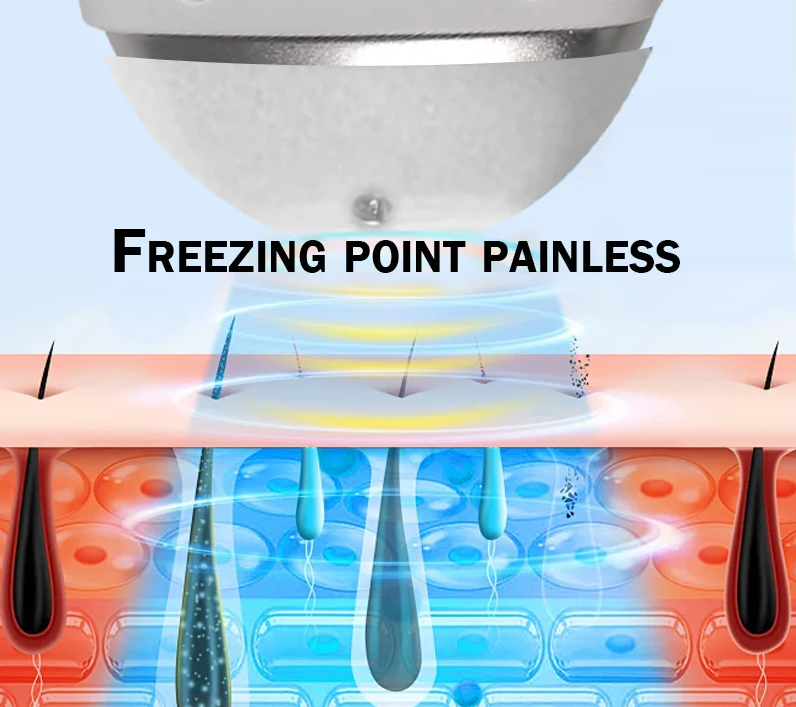
A sapphire cooling system uses a transparent sapphire window that comes into contact with the skin during treatment. The cooling surface helps reduce epidermal heat and improve patient comfort while laser energy is delivered to the target area.
However, cooling should not be considered a standalone measure of treatment safety or effectiveness. Wavelength, fluence, pulse duration, spot size, cooling temperature, skin type, hair characteristics, and operator technique all influence treatment performance.
For clinics and professional equipment buyers, understanding how these factors work together is more useful than simply looking for a device advertised as “painless” or suitable for “all skin tones.”
1. What Is Sapphire Cooling in Diode Laser Hair Removal?
Sapphire cooling is a form of contact cooling in which a cooled sapphire window is positioned directly against the treatment area.
The sapphire component performs two important functions:
- It provides direct thermal contact with the skin.
- Its optical transparency allows laser energy to pass through toward the treatment target.
Unlike external air cooling, which cools the skin from a short distance, contact cooling works directly at the treatment interface.
A typical cooling system may combine several components, including:
- Sapphire crystal window
- Thermoelectric cooling module
- Water circulation or heat dissipation system
- Air cooling
- Temperature monitoring and control
- Handpiece thermal management
The exact configuration varies between devices, so buyers should not assume that every sapphire-cooled system uses the same cooling architecture.
2. How Does Sapphire Cooling Work?
The basic treatment sequence can be understood in four stages.
| Stage | What Happens | Main Purpose |
|---|---|---|
| Pre-cooling | The sapphire window cools the treatment surface | Reduces initial epidermal temperature |
| Laser delivery | Laser energy passes through the cooling window | Targets melanin in the hair structure |
| Thermal control | Cooling continues around laser delivery | Helps limit excessive surface heating |
| Post-cooling | The cooled window remains in contact with the skin | Helps dissipate residual heat |
This is why the cooling system should be evaluated as part of the complete laser platform rather than as an isolated feature.
The quality of the cooling system can depend on factors such as cooling temperature stability, heat dissipation capacity, response time, contact area, and the ability to maintain performance during repeated treatments.
For a professional clinic, stable cooling during the entire treatment session can be more important than simply achieving a very low temperature for a short period.
3. Why Does Sapphire Cooling Improve Treatment Comfort?
Laser hair removal works by delivering thermal energy to structures containing melanin. Because the treatment involves heat, some patients may experience sensations such as warmth, tingling, snapping, or brief discomfort.
Sapphire contact cooling can help reduce the amount of heat accumulated at the skin surface.
This may improve the overall treatment experience by:
- Reducing the sensation of heat
- Helping protect the epidermis
- Improving patient tolerance
- Making higher treatment settings more manageable when clinically appropriate
- Supporting more consistent treatment sessions
However, “painless” should not be interpreted as a guarantee.
Treatment sensation can vary according to:
- Hair density
- Hair thickness
- Skin type
- Treatment area
- Wavelength
- Fluence
- Pulse duration
- Spot size
- Individual sensitivity
- Cooling performance
For example, a densely haired area may feel different from an area with sparse hair even when exactly the same device is used.
Therefore, a better way to evaluate a laser system is to ask:
How effectively does the cooling system control treatment heat at clinically appropriate settings?
rather than simply asking whether the device is “100% painless.”
4. Is Sapphire Cooling Suitable for Different Skin Tones?
One of the most common reasons buyers look for sapphire cooling is the expectation that better cooling automatically makes a laser suitable for every skin tone.
The reality is more nuanced.
Sapphire cooling can improve epidermal heat management, but skin-type suitability depends on the complete treatment system.
Important variables include:
- Laser wavelength
- Fluence
- Pulse duration
- Repetition rate
- Cooling temperature
- Skin pigmentation
- Recent sun exposure or tanning
- Hair color and thickness
- Treatment technique
A simplified clinical consideration looks like this:
| Skin Profile | Important Considerations |
|---|---|
| Fitzpatrick I–II | Lower epidermal melanin generally makes parameter selection less challenging |
| Fitzpatrick III–IV | Cooling and appropriate parameter selection become increasingly important |
| Fitzpatrick V–VI | Wavelength, fluence, pulse duration and epidermal cooling require particular attention |
| Recently tanned skin | Additional assessment and appropriate treatment protocols are important |
The key point is:
Sapphire cooling can support epidermal protection, but it does not eliminate the need for appropriate settings and patient assessment.
This distinction is especially important for professional buyers because a device should never be selected solely on the claim that it works for “all skin tones.”
5. How Does Wavelength Affect Treatment?
Cooling and wavelength perform different jobs.
The wavelength determines how laser energy interacts with tissue, while cooling primarily helps manage heat at the skin surface.
Common diode laser configurations include wavelengths around:
| Wavelength | General Characteristics | Common Consideration |
|---|---|---|
| 755nm | Higher melanin absorption | Often selected for finer or lighter hair characteristics |
| 808nm | Balanced absorption and penetration | Widely used for general diode laser hair removal |
| 1064nm | Lower melanin absorption with deeper penetration | Often considered when treating darker skin types |
These descriptions are simplified and should not be treated as universal treatment protocols.
A multi-wavelength diode laser platform can give practitioners more flexibility because different wavelengths may be selected according to patient and hair characteristics.
The important buying question is therefore not:
“Does this device have sapphire cooling?”
but:
“How does the cooling system work together with the available wavelengths and treatment parameters?”
6. Sapphire Cooling vs. Other Cooling Technologies
Professional laser systems may use different approaches to thermal management.
Air Cooling
Air cooling directs cooled air toward the treatment area.
Advantages:
- Simple design
- Relatively easy maintenance
- No direct cooling window required
Limitations:
- Less direct contact with the epidermis
- Cooling effectiveness can depend on airflow and distance
Sapphire Contact Cooling
A cooled sapphire window contacts the skin directly.
Advantages:
- Direct surface cooling
- Transparent optical interface
- Helps manage epidermal heat during laser delivery
- Can improve treatment comfort
Limitations:
- Cooling performance depends on the entire thermal system
- Requires proper cleaning and maintenance
- Temperature control needs to remain stable
Water Cooling
Water may be used inside the system to remove heat generated by the laser and cooling components.
It is important to understand that internal water cooling and sapphire contact cooling are not necessarily competing technologies.
A professional system may use water circulation internally while also using a sapphire window for direct skin cooling.
Multi-Layer Cooling
Some platforms combine:
TEC + water circulation + air cooling + sapphire contact cooling
The advantage is that each component addresses a different part of the thermal-management problem.
For high-volume clinics, this can be particularly relevant because the cooling system must maintain stable performance over repeated treatments.
7. What Should Buyers Check in a Sapphire-Cooled Laser?
For professional buyers, the cooling temperature displayed on a brochure is not enough.
A more useful evaluation includes the following specifications.
Cooling Temperature
Ask for the actual operating temperature range of the sapphire window.
Do not assume that a lower advertised temperature automatically means better clinical performance.
Cooling Stability
Ask whether the system can maintain its cooling performance during continuous operation.
This is particularly important for clinics performing multiple treatments consecutively.
Cooling Response
Determine how quickly the cooling system reaches its target temperature after activation.
A system that cools quickly can be more practical in busy treatment environments.
Contact Area
The size and design of the sapphire window influence how effectively cooling is transferred to the treatment area.
Temperature Monitoring
Ask whether the device actively monitors and controls the cooling temperature.
Thermal Management
Find out how heat generated by the TEC system and laser module is dissipated.
A well-designed system needs to move heat away from the cooling components rather than simply generate cold at the handpiece.
8. What Other Specifications Matter Besides Cooling?
A professional diode laser should never be selected based on cooling technology alone.
Buyers should also evaluate:
| Specification | Why It Matters |
|---|---|
| Wavelength | Determines how laser energy interacts with the target |
| Fluence range | Determines available energy settings |
| Pulse duration | Influences thermal delivery |
| Spot size | Affects treatment coverage and application |
| Repetition rate | Influences treatment speed |
| Handpiece design | Affects ergonomics and operator fatigue |
| Cooling system | Supports thermal management and comfort |
| Control software | Influences workflow and parameter management |
| Duty cycle | Important for high-volume clinics |
| Maintenance requirements | Affects long-term operating costs |
This is where professional buyers should move beyond marketing language.
For example, two systems may both advertise:
“Sapphire Cooling”
but their actual cooling architecture, temperature stability, thermal management, laser output, and duty cycle may be completely different.
9. Why Cooling Performance Matters for High-Volume Clinics
Cooling becomes particularly important when a device is used repeatedly throughout the day.
A clinic may perform:
- Facial treatments
- Underarm treatments
- Bikini-area treatments
- Arm treatments
- Leg treatments
- Back treatments
in succession.
Under these conditions, the thermal-management system has to deal with heat generated by both the laser source and the cooling components.
A professional buyer should therefore ask:
- How long can the device operate continuously?
- Does laser output change during extended use?
- Does cooling performance remain stable?
- Is there an automatic temperature protection system?
- What happens if the cooling temperature rises?
- How frequently does the system require maintenance?
These questions provide more useful information than simply comparing the lowest advertised sapphire temperature.
10. What Makes a Sapphire-Cooled Device Professional?
A professional system should be evaluated as a complete platform.
Important factors include:
1. Consistent Laser Output
Stable energy delivery is fundamental to predictable treatment protocols.
2. Reliable Cooling
Cooling should remain stable during normal operating conditions.
3. Flexible Parameters
Practitioners need sufficient control over parameters to adapt treatment to different patients and treatment areas.
4. Ergonomic Handpiece
A comfortable handpiece can improve operator efficiency during longer sessions.
5. Appropriate Safety Controls
The system should include appropriate protections against excessive temperature, incorrect operation, or abnormal system conditions.
6. Serviceability
Cooling components, filters, water circuits, optical surfaces, and other serviceable parts should be accessible according to the manufacturer's maintenance requirements.
7. Technical Support
Training, spare parts, troubleshooting and after-sales support are especially important for professional equipment.
11. What Should a Buyer Ask the Manufacturer?
Before purchasing a professional diode laser, request specific technical information rather than relying only on product brochures.
Cooling Questions
- What type of sapphire crystal is used?
- What is the normal cooling temperature range?
- How is cooling temperature measured?
- How quickly does the sapphire window reach the target temperature?
- How is heat removed from the cooling system?
- Does cooling performance remain stable during continuous operation?
Laser Questions
- Which wavelengths are available?
- What is the adjustable fluence range?
- What pulse durations are available?
- What spot sizes are available?
- What is the maximum repetition rate?
- How is laser output calibrated?
Maintenance Questions
- Does the cooling system require water replacement?
- What type of water or coolant is required?
- How often should filters be cleaned?
- How often should the handpiece be serviced?
- What components are considered consumables?
Business Questions
- What is the warranty period?
- Are spare parts available?
- How long is technical support provided?
- Is operator training included?
- What documentation is supplied with the device?
This information can help buyers distinguish a genuine professional system from a device that simply uses “sapphire cooling” as a marketing term.
12. Sapphire Cooling Does Not Replace Proper Treatment Parameters
This is one of the most important points for both practitioners and equipment buyers.
Cooling is a supporting technology, not a substitute for appropriate treatment parameters.
A laser treatment involves several variables that must work together:
Wavelength → Fluence → Pulse Duration → Spot Size → Cooling → Skin Response
Changing one variable can affect the overall treatment response.
For example, increasing energy without considering skin type, hair characteristics and cooling performance may increase thermal exposure.
Similarly, a powerful cooling system does not mean that the laser can automatically be operated at the highest available energy.
Professional systems should therefore provide sufficient parameter flexibility and clear manufacturer training rather than relying on a single “maximum power” specification.
13. Common Marketing Claims Buyers Should Question
When comparing sapphire-cooled diode lasers, be careful with statements such as:
“100% Painless”
No laser hair removal system can guarantee identical sensation for every patient.
A better question is:
What cooling performance and treatment parameters contribute to improved patient comfort?
“Safe for All Skin Tones”
This is too broad as a standalone claim.
Ask for information about:
- Available wavelengths
- Recommended settings
- Cooling performance
- Skin-type considerations
- Contraindications
- Clinical training
“Lowest Cooling Temperature”
A lower temperature is not automatically better.
The important question is whether the system can maintain appropriate, controlled cooling during actual treatment.
“Professional Results at Home”
Portability does not automatically make a device equivalent to a clinic-grade system.
Professional buyers should evaluate output, duty cycle, cooling architecture, parameter flexibility, safety systems, regulatory documentation and service support.
14. Sapphire Cooling and Portable Diode Laser Systems
Portable and mobile diode laser systems are becoming increasingly attractive because they can reduce space requirements and improve equipment flexibility.
A compact device can be useful for:
- Small aesthetic clinics
- Treatment rooms with limited space
- Mobile practitioners
- Multi-room practices
- Clinics that need flexible equipment deployment
However, portability should not come at the expense of thermal management.
When evaluating a mobile laser hair removal machine, buyers should pay particular attention to:
- Handpiece cooling
- Internal heat dissipation
- Continuous operating time
- Power stability
- Cooling-system maintenance
- Handpiece weight
- Treatment speed
A compact design is only valuable if the device can maintain reliable performance during normal clinical use.
15. How to Choose the Right Sapphire-Cooled Diode Laser
Rather than choosing a system based on one specification, use a complete evaluation framework.
| Evaluation Area | Questions to Ask |
|---|---|
| Cooling | Is cooling stable and appropriately controlled? |
| Wavelength | Does the wavelength configuration fit the intended patient population? |
| Parameters | Is there sufficient control over fluence and pulse duration? |
| Treatment speed | Can the system handle the expected treatment volume? |
| Handpiece | Is it ergonomic and practical for repeated use? |
| Maintenance | What components require regular service? |
| Safety | What built-in monitoring and protection systems are provided? |
| Training | What operator training is included? |
| Warranty | What parts and service are covered? |
| Support | Can technical assistance and spare parts be obtained reliably? |
This approach helps prevent buyers from choosing a device simply because it has the lowest advertised cooling temperature or the highest headline power.
16. Frequently Asked Questions
Is sapphire cooling the same as ice cooling?
No.
Sapphire cooling uses a cooled crystal window in direct contact with the skin. Ice cooling relies on a separate cooling material or application method.
The two approaches should not be treated as technically identical.
Does sapphire cooling make laser hair removal painless?
It can improve comfort by reducing heat at the skin surface, but individual treatment sensation varies.
Factors such as wavelength, fluence, hair density, treatment area and patient sensitivity all contribute to the experience.
Can sapphire cooling be used with 808nm diode lasers?
Yes. Sapphire contact cooling can be incorporated into diode laser systems using 808nm and other wavelengths.
The cooling system and laser wavelength perform different functions and can be designed to work together.
Is sapphire cooling suitable for darker skin?
It can provide useful epidermal cooling, but cooling alone does not determine whether treatment is appropriate for darker skin.
Wavelength, energy settings, pulse duration, skin condition and clinical protocols must also be considered.
Does a lower sapphire temperature mean better treatment?
Not necessarily.
The important issue is controlled and stable cooling, not simply the lowest possible temperature.
What should professional buyers check first?
Start with the complete system:
wavelength + treatment parameters + cooling + safety + reliability + service support.
This provides a much more meaningful comparison than looking at a single specification.
17. Internal Resources for Further Reading
For a deeper explanation of the cooling mechanism, see:
Sapphire Cooling in Diode Laser Hair Removal Machines: How It Works and Why It Matters
For the specific role of contact cooling, see:
Sapphire Contact Cooling in Laser Hair Removal: How It Works
For portable professional equipment, see the:
Mobile Laser Hair Removal Machine Collection
Conclusion
Sapphire cooling is an important thermal-management technology in modern diode laser hair removal systems. By placing a cooled sapphire surface directly against the skin, the system can help control epidermal heat and improve treatment comfort while allowing laser energy to reach the intended target.
However, sapphire cooling diode laser hair removal should be evaluated as a complete technology rather than a single feature. Cooling temperature, thermal stability, wavelength, fluence, pulse duration, spot size, treatment speed and patient characteristics all influence the final treatment experience.
For professional buyers, the strongest purchasing decision comes from comparing the entire system rather than choosing the device with the lowest advertised temperature or the strongest “painless” claim.
A well-designed system should combine appropriate laser wavelengths, controllable treatment parameters, stable sapphire cooling, reliable thermal management, safety controls, operator training and long-term technical support.
Ultimately, the goal is not simply to find a laser with sapphire cooling. It is to choose a professional platform in which laser delivery and cooling technology work together to provide controlled, repeatable and comfortable treatment across an appropriately selected patient population.